
Colleyville, TX · Garage Door Service
Roller Replacement for Argyle's Late-'90s Garage Doors
Argyle homes built mostly in the late 1990s are hitting original-roller failure now. Here's what roller replacement costs and involves, from Colleyville Garage Door Pros.
- Repairs & new doors
- Springs & openers
- Serving 7 nearby communities
The Symptom
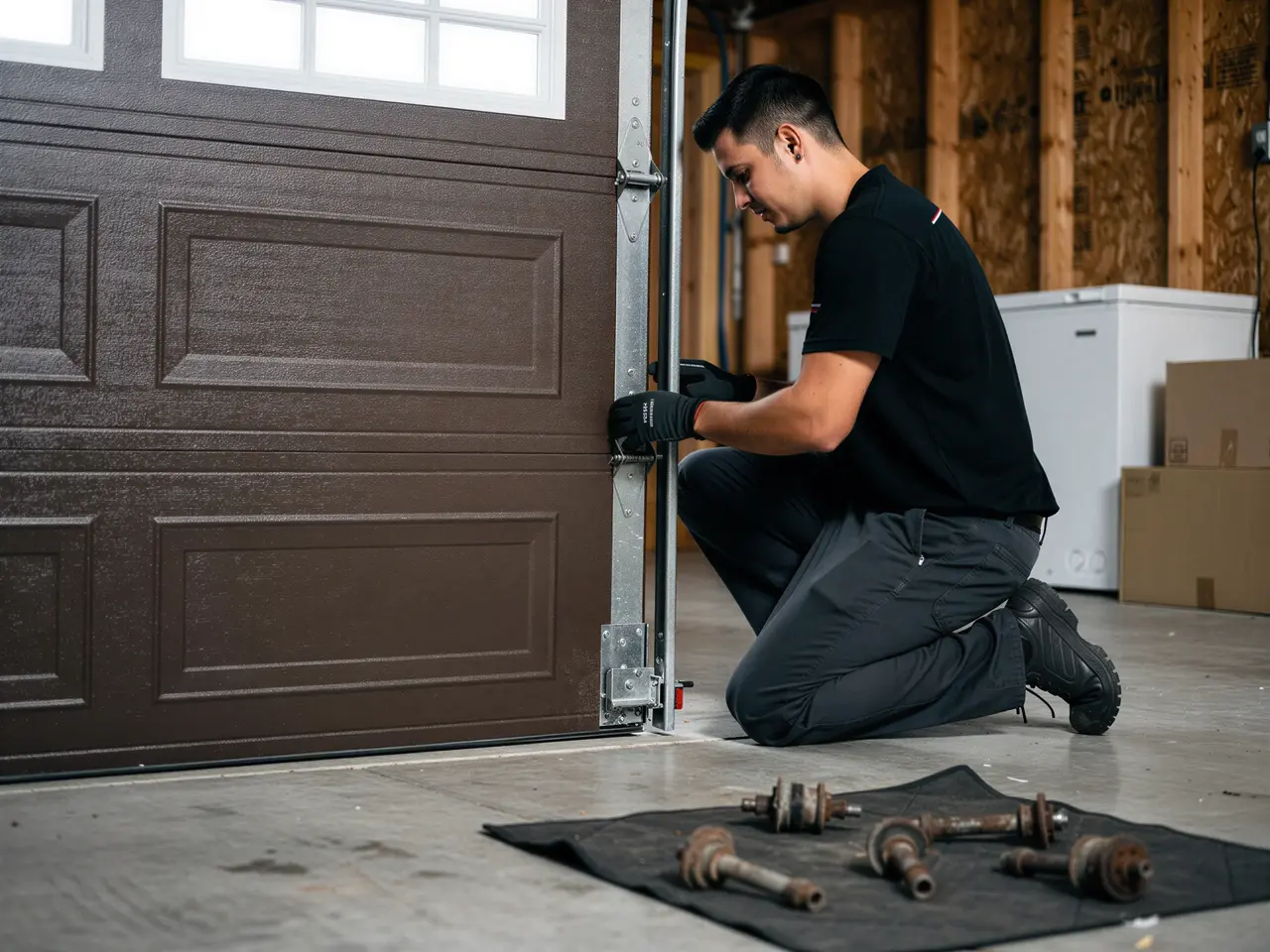
At a median household income of $172,604, Argyle homeowners aren't usually weighing whether to fix a garage door - they're weighing whether it's worth fixing versus just handling it right the first time. That matters for rollers specifically, because the symptom is easy to misread. A door that shudders, hangs up a few inches into travel, or makes a grinding or clacking sound as it moves isn't always a spring problem. Worn rollers - especially the stock steel or early nylon rollers that shipped with doors built in the late 1990s - wear unevenly at the stem and bind in the track long before the spring gives out. You'll often hear it before you see it: a rhythmic knock as each roller hits the same worn spot in the track, once per rotation. If the door is still moving but sounds rough, that's a roller job, not a spring job, and catching it there is cheaper than letting it chew up the track edges.
The Cost of This Job
Roller replacement on a standard double door runs well below a full door replacement, and at Argyle's income level, that's usually the right call rather than a stretch. Where it tips toward full replacement is when the track itself is bent or the door panels are original from the 1997 median build year and already showing rust or delamination at the bottom section - at that point, new rollers on an old door with a tired track is money spent twice. We'll tell you straight if that's where your door sits rather than sell you rollers on a door that needs more. For most Argyle houses in this build era, the hardware is the weak point, not the door, so rollers alone solve it.
What the Fix Involves
The job is mechanical, not electrical: releasing tension on the door, pulling the old rollers from the hinges and end brackets one at a time, and setting new ones - usually sealed nylon rollers with ball bearings, which run quieter and outlast the steel rollers that came standard on doors built through the 1990s and early 2000s. We check the track alignment while the rollers are out, since a door riding on worn rollers for years will often have knocked the track slightly out of plumb, and a new roller in a bent track just fails again. We also check cable and hinge wear at the same time, since they take load off the same hardware. We don't replace parts that aren't worn just to round out a visit - if your bottom rollers are shot but the top set is fine, we'll say so.
How to Book
We run this job out to Argyle from Colleyville, about 15 miles down the road. Call and describe what you're hearing - a knock, a grind, a hitch partway up - and we can usually tell you over the phone whether it sounds like a roller problem or something else before a truck ever heads out. See our Argyle service page for what else we cover out this way, or check the Colleyville roller replacement page for how this same job runs closer to home.
What Causes It Around Here
Argyle's housing stock centers on a median build year of 1997, which puts a lot of doors right at the 25-to-30-year mark on original hardware - the point where steel rollers have worn enough stem play to start knocking in the track even if the door still looks fine from the driveway. Heat is a factor too: this part of Texas sits in a moderate-to-heavy heat band, and repeated summer expansion and contraction in the track rail accelerates wear at the roller-to-track contact point faster than it would in a milder climate. None of that's unique to any one house in the 1,660 households here, but it's consistent - if your neighbor's door started clacking around year 25, yours probably will too.
Where This Job Goes Sideways
The failure mode we see most is someone replacing rollers on a door where the track is already bent from years of a dragging roller, and the new rollers wear out again within a year because they're still fighting a crooked rail. The other one is mismatched roller stems - not every door built in this era used the same stem length or hole spacing, and a roller that's close enough but not exact will bind under load even though it looks like it fits. We carry the common sizes on the truck, but an unusual stem length on an older custom door can mean a short wait on a part rather than a same-visit fix, and we'd rather tell you that up front than force a part that's wrong.
Frequently asked questions
How do I know if it's the rollers and not the springs?
Rollers usually show up as noise and rough movement while the door still opens and closes - a knocking or grinding sound as each roller passes through the track. A spring problem usually means the door won't move at all, or feels suddenly heavy. If the door still runs but sounds rough, start with rollers.
Will new rollers fix a door that's been loud for years?
Often, yes, if the track hasn't been bent by the worn rollers dragging through it. We check alignment before setting new rollers, because a straight track is what makes the new hardware last. If the track's bent, we'll flag that separately.
Do you travel to Argyle for a job this small?
Yes. We run jobs out from Colleyville, about 15 miles away, and roller replacement is a common call from this area given how much of the housing here was built in the late 1990s and is hitting that hardware's wear point now.
Are nylon rollers worth the upgrade over steel?
For most houses, yes. Nylon ball-bearing rollers run quieter and wear more evenly than the steel rollers that were standard when a lot of Argyle's housing went up, and they're a direct swap on the same hinges without changing the door itself.
Book garage door service in Colleyville
Call now or request a quote - tell us what the door is doing and where you are.