
Colleyville, TX · Garage Door Service
Noises That Mean Something: A Colleyville Homeowner's Guide
Most Colleyville garages were built between 1953 and 2014, with 1980s-90s stock the norm. Here's what each noise tells you about that specific hardware.
- Repairs & new doors
- Springs & openers
- Serving 7 nearby communities
What to Check
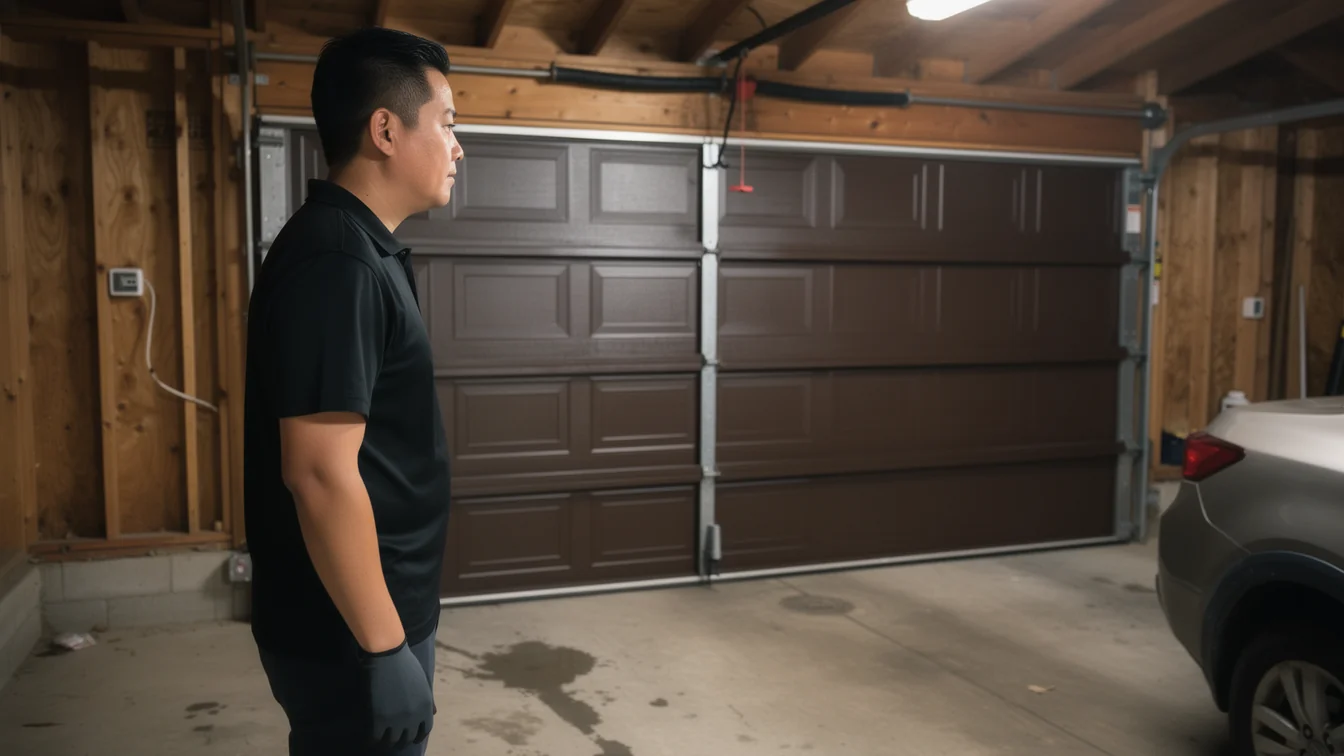
Start with the springs, not the opener. In a house built in the 1980s or 90s - the era that dominates Colleyville's housing stock - the torsion spring assembly is original or close to it more often than owners expect, since a working spring can run two decades without complaint until it doesn't. Grab the release handle, pull the door halfway by hand, and let go. If it drops instead of holding, the spring is tired, not the motor. Next check the rollers: steel rollers from that build era grind in the track before they fail outright, while nylon rollers on later retrofits (common in houses built closer to the 1997 median year for this area) tend to squeal instead. Look at the track brackets too - loose bolts on a 30-plus-year-old bracket are a maintenance job, not a replacement job. Last, check the cables for fraying where they wrap the drum. None of this takes tools you don't already own, and five minutes of looking tells you more than guessing from the noise alone.
The Problem
A noise is a symptom, and the cause usually traces back to how old the hardware actually is. Houses here span construction from 1953 up through 2014, but the bulk of the stock - across the 29 communities this area covers - dates to the 1980s and 90s. That matters because torsion springs are rated by cycle count, not years, and a spring installed when a house was built in 1988 has likely seen 10,000 or more open-close cycles by now. The grinding sound people describe as 'the opener dying' is frequently a worn roller bearing complaining inside a track that hasn't been lubricated since the house changed hands. A slow, rhythmic thump on the way down is almost always a bent track section, not the motor losing power. The hardest noise to diagnose over the phone is a single sharp bang, because that's either a cable popping off a drum or a spring letting go - and only one of those is safe to stand near.
What the Weather Here Does to It
This area sits in a moderate heat climate band, which is kinder to garage door hardware than true desert heat but still does real work on steel and lubricant over a few decades. Grease that was fine when a house was built in the 90s thins out and runs off the rollers faster in summer heat, which is why a door that was quiet in March starts chirping by August. Metal expansion from heat cycling also loosens track bolts gradually - not dramatically, just enough that a bracket that was snug ten summers ago has a few millimeters of play now. None of this is storm damage or a sudden event; it's slow wear that shows up as noise before it shows up as a stuck door. Doors on the original 1980s-90s hardware feel this more than newer installs, simply because the lubricant has had more heat cycles to work through.
The Cost of This Job
We don't have a flat number to quote here, and we're not going to invent one. What we can say is that the job scales with what's actually worn: a roller swap on a door with otherwise sound 1990s-era hardware is a different bill than replacing a spring and both end bearings on the same door. Given the median household income across this service area sits near $118,949, most owners we talk to are weighing a repair against a full door replacement rather than scraping for either - that's a conversation worth having before a tech shows up, not after. One honest limitation: if your opener and door were both installed before the 1997 median build year for this area and the drum, cables, and springs are all original, we'll often tell you flat out that a repair is throwing money at parts that are going to fail again within a year, and a new door is the better spend.
Frequently asked questions
My door is loud but still opens fine. Do I need to call someone now?
Not urgently, but don't wait either. A door that still works but makes noise is usually a roller or lubrication issue, both cheap fixes if caught early. The risk is letting a dry track or a loose bracket run long enough that it becomes a cable or spring problem, which is a same-week call instead of a next-month one.
Is a squeal always the rollers?
Mostly, especially on houses built in the 1980s or 90s where steel rollers are still common. But a squeal that gets louder near the top of the travel can be the opener's drive gear instead. If spraying the rollers with lubricant doesn't quiet it within a day, the noise is coming from somewhere else.
Why does my door sound different in summer?
Heat thins out old lubricant and lets metal parts expand slightly, which loosens hardware that was snug in cooler months. In this area's moderate heat band it's a gradual thing, not sudden damage, but it does mean a door that's quiet in spring can start complaining by late summer without anything actually breaking.
Should I fix the spring myself?
No. A torsion spring under tension can cause serious injury if it releases while you're working on it, and that's true regardless of how old or new the door is. Checking whether the spring is the problem (the pull-and-release test) is safe. Replacing it is not a homeowner job.
Related garage door services in Colleyville
More garage door guides
Book garage door service in Colleyville
Call now or request a quote - tell us what the door is doing and where you are.