
Colleyville, TX · Garage Door Service
Weather Seals and Drafts on Colleyville Garage Doors
Why garage door weather seals fail faster on Colleyville's 1980s-90s housing stock, what heat does to the rubber, and what this repair actually costs to fix right.
- Repairs & new doors
- Springs & openers
- Serving 7 nearby communities
What to Check
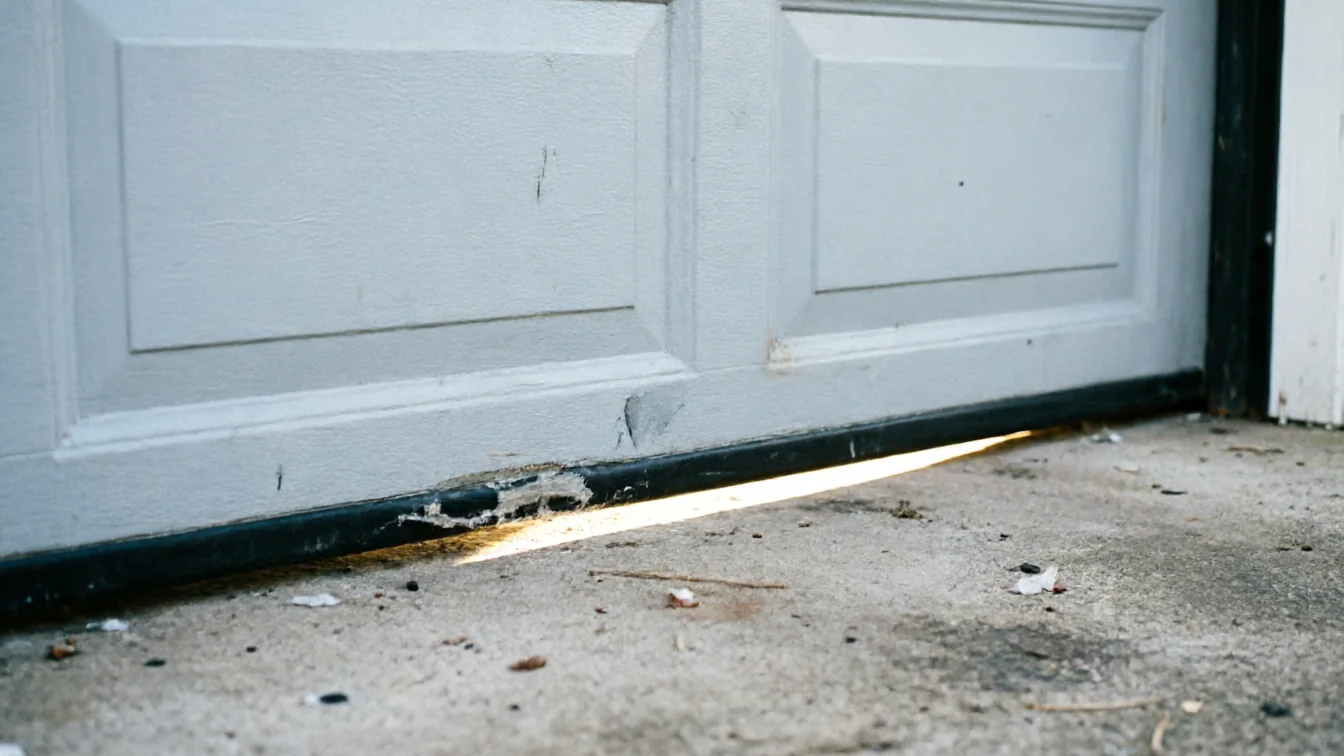
Start at the bottom of the door. The bottom seal is a strip of vinyl or rubber set into a track along the door's edge, and on most Colleyville houses it's been baking in the sun for decades. Pull on it gently. If it's stiff, cracked, or pulling loose from the track at the corners, that's your draft source.
Next check the side and top seals where the door meets the frame. Colleyville's housing stock runs from 1953 up through 2014, with the typical build landing around 1997, so a lot of these doors and their original weatherstripping are approaching or past 25 years old. That's well beyond the service life of most vinyl seals.
Put your hand along the door edges on a sunny afternoon. If you feel air moving, or see daylight at the corners, the seal has shrunk away from the jamb. Also look at the seal's color - chalky white or gray instead of black usually means the rubber has already hardened and lost its flex. A seal that's lost flex won't reseal no matter how you adjust the door.
The Problem
Weatherstripping is rubber or vinyl, and both materials shrink as they age, especially when they go through repeated heat cycles. Across the 29 named areas in this service territory, most garage doors date to the 1980s and 1990s building boom, which means a large share of the seals in Colleyville garages are original or close to it.
The shrinkage shows up as a gap at the bottom corners first, since that's where the seal flexes most with every open and close cycle. Once the gap opens, it doesn't close back up on its own - the material has set in its shrunken shape. You can push the seal back into the track, and it may hold for a season, but it will pull loose again.
The honest limitation here: once a bottom seal has hardened and cracked, patching it is a short-term fix at best. Replacement is the only repair that actually stops the draft, and swapping a worn seal for a new one in the same track style is usually a straightforward job rather than a full door replacement.
What the Weather Here Does to It
Colleyville sits in a moderate-heat climate band rather than an extreme one, which sounds like good news for a garage door, but moderate heat still means daily expansion and contraction on the door panel and the seal pressed against it. Over a few thousand cycles a year, that steady flex is what breaks vinyl down faster than a single dramatic weather event would.
Because the heat here is moderate and not extreme, Colleyville doors don't usually show the deep panel warping you'd see somewhere with harsher summers. What they do show is seal fatigue - the rubber hardens, loses its memory, and stops springing back into shape after each cycle.
That matters for timing. A seal that's failed from heat fatigue is a different repair than one torn by storm debris or impact. There's no dramatic cause to point to, which is why a lot of homeowners don't notice the draft until their energy bill creeps up or they feel cold air at the floor in winter.
The Cost of This Job
We don't have a flat number to quote here, since seal replacement cost depends on the door's track style and whether the aluminum retainer strip needs replacing along with the vinyl itself. What we can tell you is what drives the cost up or down.
A straight bottom-seal swap on a standard track is usually the simplest version of this job. It gets more involved if the retainer channel is bent, rusted, or if the door panel itself has warped enough that no seal will seat flush against it anymore - in that case the seal was never the real problem.
Given that a meaningful share of Colleyville's garage doors trace back to that 1980s-90s stretch of construction, we see a steady stream of seal and track jobs on original hardware that's simply reached the end of its service life. If your door is from that era and the seal has hardened past flexing, replacing the seal now is almost always cheaper than waiting for the gap to force an opener or track problem.
Frequently asked questions
Why does my garage door let in a draft only at the bottom corners?
That's where the bottom seal flexes the most every time the door opens and closes. Over years of cycling, especially on older vinyl, the corners are the first spot to shrink away from the track, so a gap opens there before it does anywhere else along the door.
Can I just caulk the gap instead of replacing the seal?
Caulk doesn't flex with a moving door, so it cracks and falls out within a few open-close cycles. It's not a real fix. Replacing the worn seal in its track is the only repair that holds up to daily use.
My house was built in the 1990s. Is the seal still original?
It's possible, especially if the door itself has never been replaced. Vinyl and rubber weatherstripping from that era has had decades of heat cycling, so even if it looks intact, it's likely lost most of its flex and isn't sealing the way it did when it was new.
Related garage door services in Colleyville
More garage door guides
Book garage door service in Colleyville
Call now or request a quote - tell us what the door is doing and where you are.