
Colleyville, TX · Garage Door Service
When an Older Garage Door in Colleyville Is Still Worth Saving
Colleyville homes mostly date to the 1980s-90s boom with some pushing back to the 1950s. Here's how to tell if your original door and opener are worth repairing.
- Repairs & new doors
- Springs & openers
- Serving 7 nearby communities
What to Check
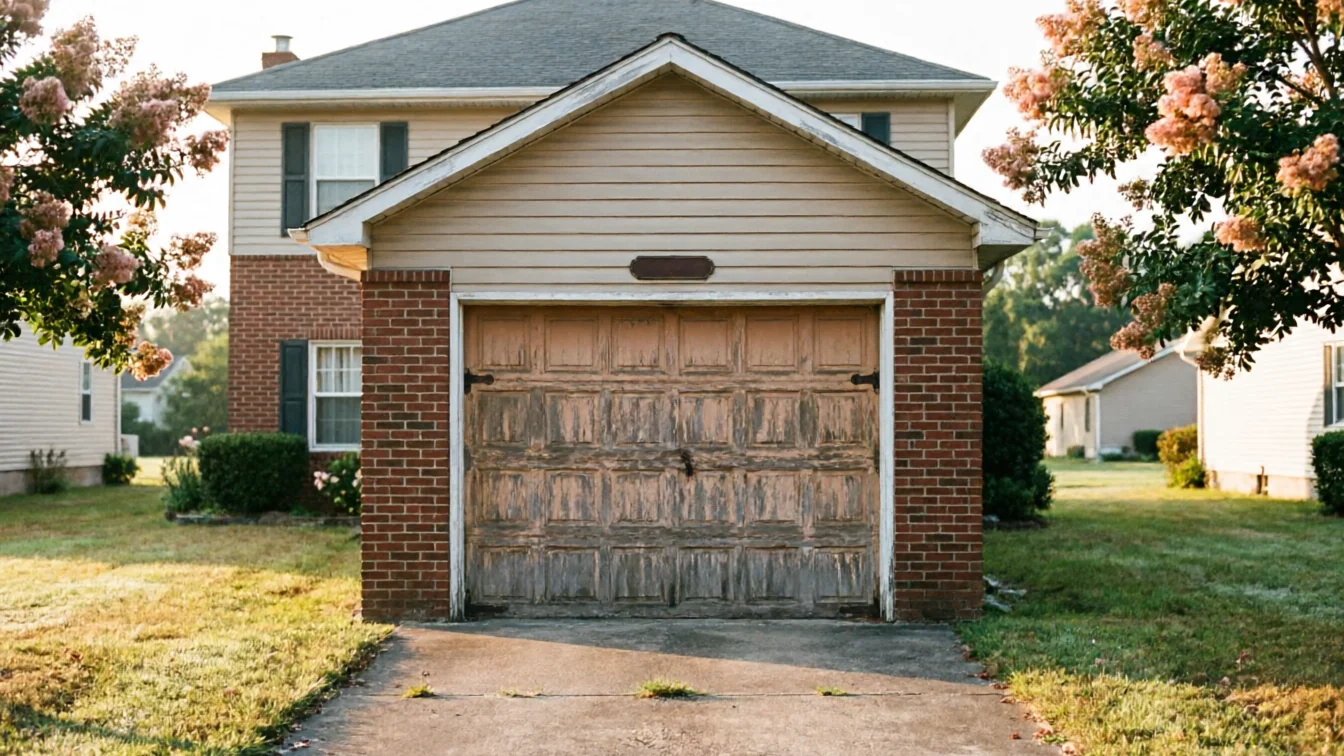
Start with the springs. If your house went up in the 1980s or 90s - which covers most of the stock around here - you're likely on your second or third spring set already, since torsion springs are rated for cycles, not years. Pop the garage light on and look at the track alignment: older sectional doors from that era used lighter steel than what's sold today, and years of Texas heat expansion can leave rollers riding slightly off the rail without it being obvious to the eye.
Check the bottom panel for rust streaks or flex when you push on it. A door from the 1953-2014 build range we see across this area can still have a sound panel set even if the opener is the original - openers from that period rarely have rolling code security or auto-reverse sensors that meet current expectations, and that alone is worth knowing before you decide anything.
Listen to the motor. Grinding or a long pause before the door moves usually means the gear is worn, not the whole unit dead. None of this tells you to replace anything yet - it just tells you what's actually failing versus what just looks old.
The Problem
The issue in Colleyville isn't usually one big failure - it's a door built in, say, 1991 wearing out five small parts at once: a worn idler bearing, a frayed cable, a spring past its cycle count, weatherstripping that's cracked from UV exposure. Each one is a cheap fix on its own. Fixing all five at once starts to approach what a new door costs, and that's the real decision point, not any single broken part.
With median household income in the area at $118,949, a lot of owners default to replacement because it feels simpler than four separate repair visits. That's not always the right call. A well-built steel door from the 1990s, if the panels aren't dented or rusted through, can often run another decade on new hardware. The honest answer depends on panel condition more than opener age - opener boards are the cheap swap, panels are not.
What the Weather Here Does to It
This area sits in a moderate heat climate band, which is kinder to garage doors than true extreme-heat regions, but it still matters. Steel panels expand and contract through the day, and over 20-30 years that cycling loosens hinge bolts and stresses the weld points on cheaper doors more than it does on insulated ones. If your door has no foam core - common in builds from the 1990s before insulated doors became standard - you'll feel that temperature swing directly in the garage, and the door itself works harder through the daily expansion cycle than an insulated model would.
Nylon rollers tend to hold up fine here since this isn't a freeze-thaw climate working against them. The bigger wear driver is just sustained heat on exposed hardware, especially for doors facing west with full afternoon sun. If your springs are original to a house built in the 1990s, they've likely already outlived their rated cycle count from heat-accelerated fatigue alone.
The Cost of This Job
We don't have a flat number to hand you here, since it depends on what's actually wrong and which parts need replacing, but the honest range distinction is this: single-part repairs (a spring, a cable, a sensor) are usually a quick, contained job. Replacing a panel on a door that's no longer made - common once you're past 15-20 years old - can mean a custom order with a longer wait than people expect.
One limitation worth saying plainly: if your door's original manufacturer discontinued that panel style, we're not going to pretend we can match it exactly. Sometimes the right fix is a new door section that's close but not identical, and sometimes it's full replacement. We'll tell you which one applies to your door before any work starts, not after.
Frequently asked questions
How do I know if my garage door is too old to repair?
Check the panels first, not the opener. If the steel is dented, rusted through, or the door predates your house's 1990s-era build with no foam insulation, repair cost can approach replacement cost fast. If panels are solid and it's just springs, cables, or rollers, repair almost always makes more sense.
Does Colleyville's climate wear out garage doors faster?
This area sits in a moderate heat band, not an extreme one, so it's gentler than some regions. Still, daily heat expansion on exposed steel hardware adds up over 20-30 years, loosening hinges and fatiguing springs faster than a mild climate would.
My house was built in the 1990s - is the opener original?
It's possible. A lot of the housing stock here dates to the 1980s and 90s, and many original openers from that period lack auto-reverse sensors and rolling code security that's now standard. Worth checking even if the door itself still works fine.
Can you match an old discontinued panel?
Sometimes, but not always exactly. If your door's style is no longer made, we'll tell you upfront whether a close match is possible or whether a replacement section or full door makes more sense, rather than promising a perfect match we can't deliver.
Related garage door services in Colleyville
More garage door guides
Book garage door service in Colleyville
Call now or request a quote - tell us what the door is doing and where you are.