
Colleyville, TX · Garage Door Service
Openers and Power Outages: What Colleyville Garages Deal With
How Colleyville's 1953-2014 housing stock and moderate heat affect garage door openers during power outages, plus what a repair actually involves here.
- Repairs & new doors
- Springs & openers
- Serving 7 nearby communities
What to Check
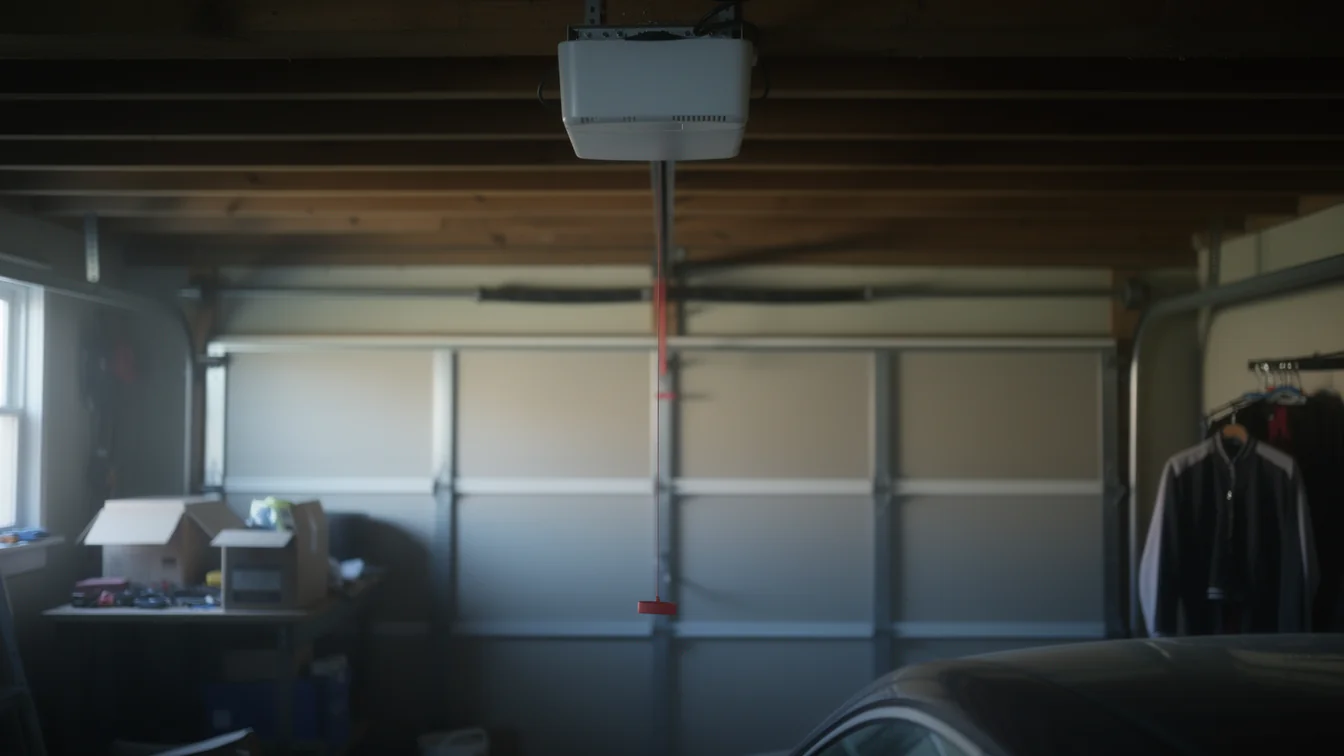
Start with the obvious: does the opener light come on at all. If nothing happens, check the breaker before you call anyone - a tripped breaker after a storm or a brief outage is common and costs you nothing to check yourself. If the light is on but the door won't move, listen for the motor. A hum with no movement usually means the gear is stripped, which is a part we replace, not the whole unit.
Next, check the manual release cord. Houses in Colleyville mostly went up between 1953 and 2014, with the typical build year sitting around 1997, which means the opener in a lot of garages is older than the house's most recent remodel. Older chain-drive units from that era often have a release cord that's gone brittle or disconnected - pull it gently, don't yank.
Last, check the battery backup if the unit has one. Not every opener installed before the mid-2000s has a backup battery built in, and if yours doesn't, a power outage means the door stays wherever it was when the power went out, locked in place by the drive gear until power returns or you release it manually.
The Problem
Across the 29 communities we work in, from Trophy Club seven miles out to Shady Shores twenty, the bulk of the stock is still 1980s and 90s construction. That generation of opener was built to run on standard household current with no expectation of a backup, and most were never retrofitted. When the power drops, even for a few seconds, the logic board on some of these units loses its memory of the door's position and needs to be reset - not broken, just confused.
With roughly 50,059 owner-occupied houses among 73,820 households in this area, a lot of garages still run the opener that came with the house, or close to it. That's not a problem on its own. It becomes one when a short outage happens while the door is mid-cycle: the motor can stall under load, and if that happens more than once, the capacitor that starts the motor is usually the next thing to go. A stalled motor from a brief cut isn't the same failure as a worn-out motor, and treating it that way means replacing a part that didn't need replacing.
What the Weather Here Does to It
Colleyville sits in a moderate-heat climate band, not the kind of extreme swing that fries circuit boards every summer, but heat still shortens the life of the parts inside an opener housing. The start capacitor and the logic board both sit in a sealed box above the car, and in summer that box runs hotter than the garage itself. Over years, that heat cycling is what ages a capacitor faster than the motor around it - which is why an opener can suddenly stop starting a door that still moves fine once you give the motor a shove.
We don't get the kind of hard freeze-thaw swings that crack housings or seize steel on a cold morning, so if your opener quits here, it's rarely the cold doing it. It's more often heat fatigue on an older board, especially paired with the stop-and-start load of a short power outage. One honest limit: if the board itself has failed, we replace the opener rather than chase a part that may not be stocked for a unit from that era.
The Cost of This Job
We don't have pricing figures to quote here, and we'd rather tell you that than make one up. What we can tell you is what drives the cost up or down. A reset after a power outage, if the board and motor are fine, is a quick call. A failed capacitor is a part swap. A full board failure on an opener old enough to match this area's 1997 median build year usually means replacement, because boards for units that age often aren't stocked anymore.
With median household income here at $118,949, most owners we talk to want a straight answer on whether to fix or replace before they commit, not a guess. If your opener is original to a house built in the 80s or 90s, ask us for that comparison directly - repair versus a new unit - before you spend money on a part that might outlive the motor around it by six months.
Frequently asked questions
Will a short power outage damage my garage door opener?
Usually not on its own. Most openers just need their position reset once power is back. The risk comes if the door was mid-cycle when power dropped - a stalled motor under load is harder on the unit than the outage itself, especially on older chain-drive openers common in this area's 1980s-90s housing.
Should I add a battery backup to my opener?
If your opener doesn't already have one built in, it's worth asking about when you're due for a new unit. Not every opener from the 1980s through early 2000s can be retrofitted, so we'd need to look at the specific model before recommending it over just resetting after outages.
Does the heat here affect my opener?
Yes, gradually. Colleyville's climate is moderate on heat, not extreme, but the sealed housing above the car still runs hot in summer. That heat cycling ages the start capacitor and logic board faster than it wears the motor, which is often why an opener quits suddenly after years of normal use.
Related garage door services in Colleyville
More garage door guides
Book garage door service in Colleyville
Call now or request a quote - tell us what the door is doing and where you are.