
Colleyville, TX · Garage Door Service
When Your Garage Door Predates Insulation Codes
Colleyville homes from the 1950s through the 1990s often carry uninsulated garage doors. Here's what that means for the panel, the opener, and the cost to fix it.
- Repairs & new doors
- Springs & openers
- Serving 7 nearby communities
What to Check
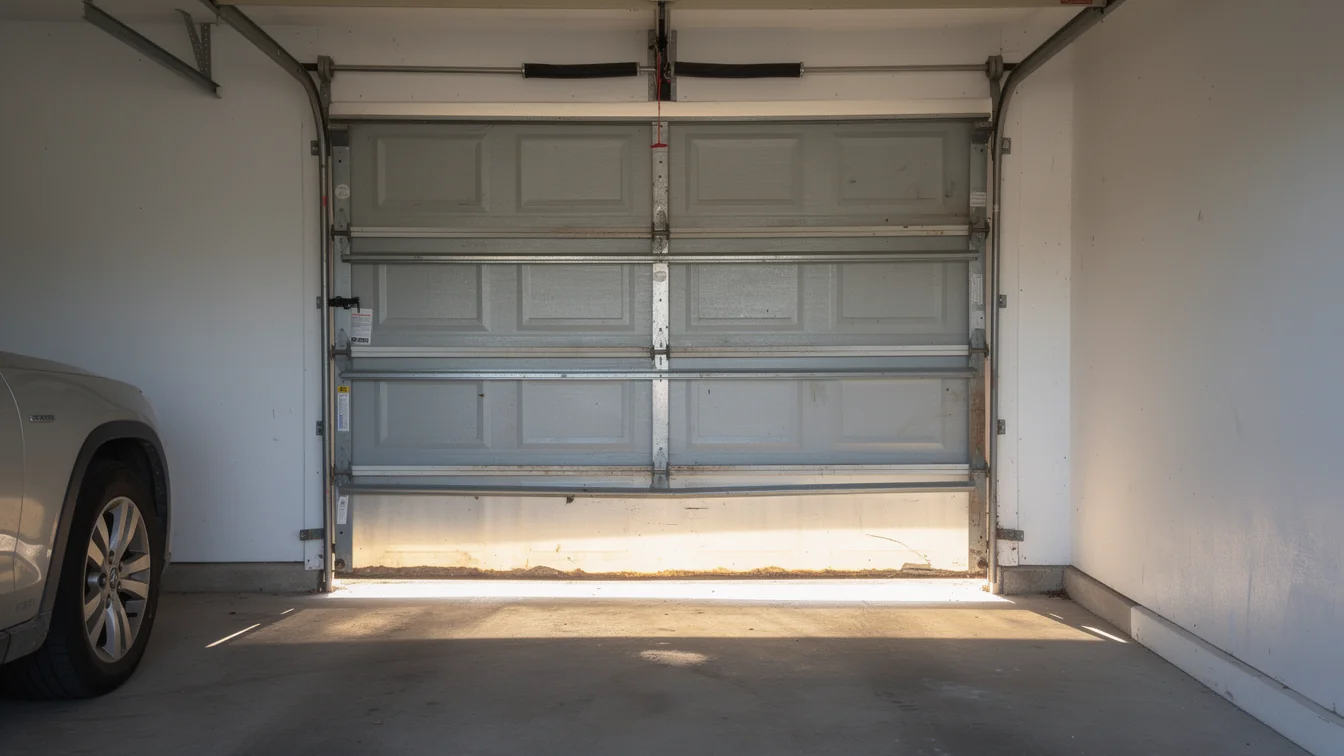
Colleyville's housing stock spans 1953 to 2014, with the median build landing around 1997. That split matters more than most owners realize. If your house went up before the mid-1990s, there's a good chance the original garage door is a single layer of steel with nothing behind it - no polystyrene, no polyurethane, just a skin. Walk out and knock on the door from inside the garage. A hollow, tinny sound means no insulation core. A denser thud means someone already swapped it.
Check the bottom seal next. On older uninsulated doors, the astragal is usually a thin bead that's hardened and cracked from UV and heat cycling. Check the panel edges where sections meet - on a 20-30 year old door, the roll-formed steel has usually thinned enough that you can flex it with one hand. None of this is an emergency by itself, but it tells you whether you're maintaining a door or buying time on one.
The Problem
Houses built here before insulation standards tightened didn't need a garage door that did anything but open and close. That's not a defect - it's just what the code required at the time, and a lot of that stock is still standing. The issue shows up now because an uninsulated steel door has almost no resistance to temperature swings, and it transfers that straight into the garage air, and often into any room that shares a wall with it.
Over years of that cycling, the steel itself fatigues faster than an insulated panel would. Insulated doors sandwich the steel around a rigid foam core, which stiffens the panel and keeps it from oscillating with every temperature change. A bare steel skin doesn't have that backing, so it flexes more, and the screws holding hinges and rollers work loose sooner. That's the actual mechanical problem - not just comfort, but shortened hardware life on a door that was never built to modern thermal expectations.
The Weather Here Does to It
This area sits in a moderate heat climate band, not an extreme one, but moderate still means real seasonal swings on a garage door that faces full sun part of the day. An uninsulated panel heats up fast, expands, and cools down fast at night - that daily cycle is what tires out steel over the decades these doors have been in service, since the housing here dates back to 1953.
On an insulated door, the foam core slows that expansion and keeps the steel skin from moving as much. On an uninsulated one, you get more flex, which loosens track alignment and hinge screws faster than it would on a newer door. It's not dramatic - nobody's door is failing overnight from heat - but it's a steady, cumulative wear pattern that shows up as noise and misalignment years before it shows up as a broken panel.
The Cost of This Job
With median household income in the service area at $118,949 and tens of thousands of owner-occupied houses in the mix, a lot of owners here end up choosing full replacement over patching an old uninsulated door once the hardware starts failing - the math works out closer than people expect once you add up spring, hinge, and seal repairs on a door that's already decades past its original spec.
I'll say the honest part plainly: if your door is still structurally sound and just uninsulated, replacing it purely for comfort isn't always worth it - insulated retrofit kits exist but they don't match a factory core, and I won't sell you one as if it does. Where replacement makes sense is when the steel is already thin and the hardware is already loose. At that point you're paying for a new door anyway; insulation just comes with it.
Frequently asked questions
How do I know if my garage door has insulation?
Knock on it from inside the garage. A hollow, tinny sound means it's a single layer of bare steel, common on houses built before the mid-1990s. A denser, quieter thud usually means a foam core is sandwiched inside, which is standard on anything built more recently in this area.
Is it worth insulating an old uninsulated door instead of replacing it?
Sometimes. If the panel and hardware are still sound, a retrofit kit can help with comfort, but it won't match a factory-built insulated core. Once the steel is already thinning or the hinges are loose, replacement usually makes more sense than adding insulation to a door that's near the end of its life anyway.
Does Colleyville's climate actually wear out garage doors faster?
The area sits in a moderate heat band, not an extreme one, but daily sun exposure still puts uninsulated steel through a real expansion-and-contraction cycle. Over the decades much of this housing has been standing, that cycling loosens hinges and track alignment faster on bare steel than on an insulated panel.
Related garage door services in Colleyville
More garage door guides
Book garage door service in Colleyville
Call now or request a quote - tell us what the door is doing and where you are.