Colleyville, TX · Garage Door Service
Garage Door Panel Replacement in Colleyville
Dented, cracked, or sun-faded panels on Colleyville homes built between 1953 and 2014 don't always mean a new door. Here's what panel replacement actually involves and when it's worth it.
- Repairs & new doors
- Springs & openers
- Serving 7 nearby communities
The Symptom
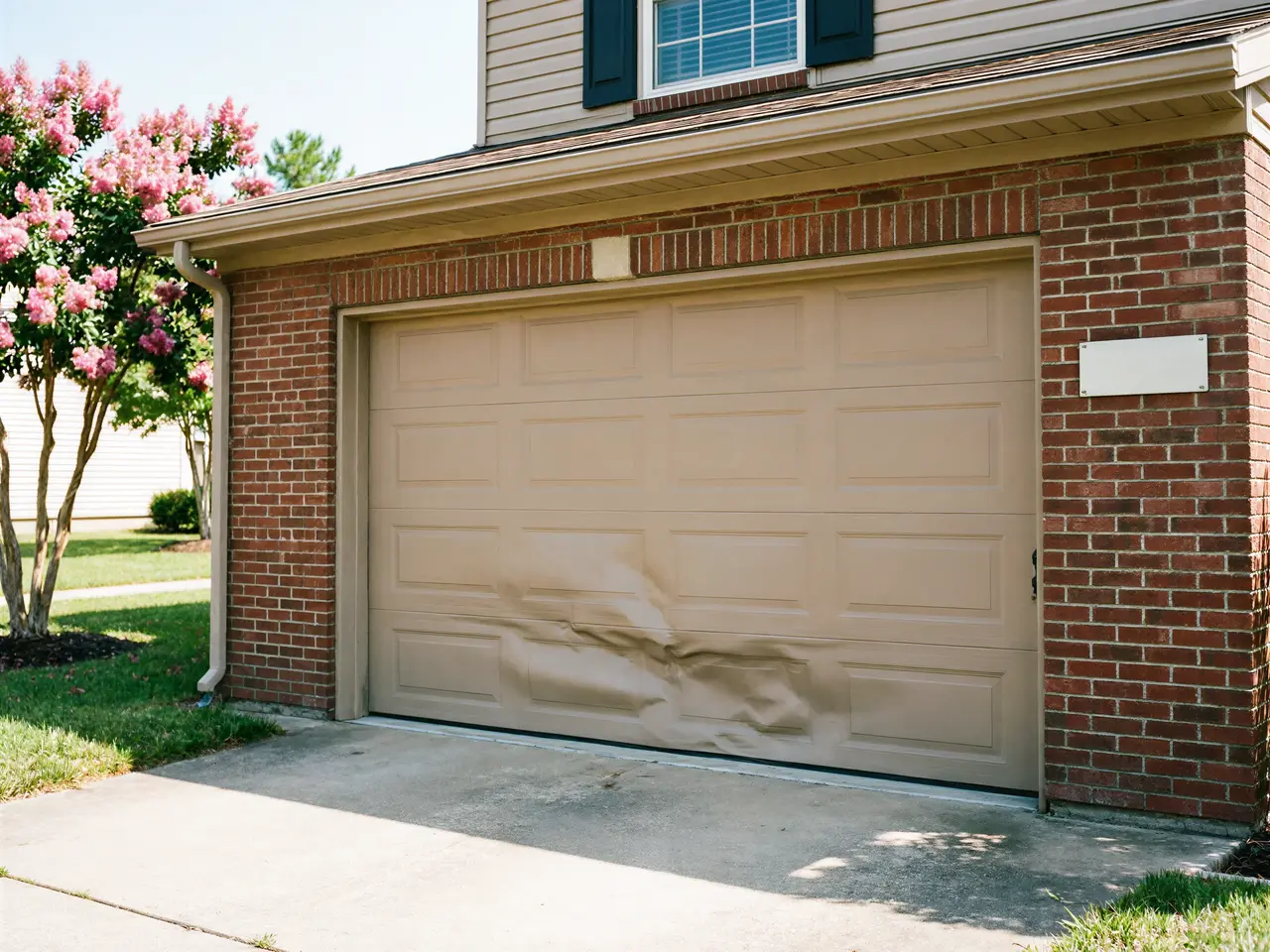
You notice one panel that's dented from a backed-into mower, cracked along a seam, or faded a shade lighter than the rest of the door from years of Texas sun. The door still opens and closes, the opener still works, but that one section looks wrong and sometimes doesn't sit flush in the track anymore. That's a panel problem, not a full door failure, and it's one of the more common calls we get on doors that are otherwise sound. Homes in this part of Texas run a wide range of ages - housing in the service area was built anywhere from 1953 up through 2014, with a median year around 1997, so the doors we're replacing panels on span several generations of steel gauge, panel height, and section design. A dented bottom panel on a mid-90s door is a different part number than a cracked panel on a door from the early 2000s, and that's before you get into color-matching a faded panel against sections that have spent two decades under direct sun. The moderate heat band this area sits in doesn't crack steel the way a hard freeze-thaw climate does, but it does fade and chalk paint finish unevenly over time, which is its own kind of mismatch problem when you're only replacing part of a door.
Where This Job Goes Sideways
The job looks simple until you try to find the exact panel. Doors made in the late 1980s and through the 1990s - which describes a large share of the stock in this area - often used section heights and hinge spacing that newer panels don't match, even from the same manufacturer line. We've opened cartons expecting a drop-in fit and found the hinge holes off by half an inch, or a rib profile that doesn't line up with the rest of the door. On a double-wide door, a mismatched replacement panel also throws off balance across both end hinges, which strains the opener and can bend a track that was fine the day before. Color is the second trap. A single new panel next to 15 years of sun-faded paint is never going to blend, no matter how close the color code is on paper, because the old sections have lost a shade and the new one hasn't. We tell people that up front rather than let them find out after the panel's installed. The third way it goes sideways is discovering the damage goes past the panel - a bent track or sprung hinge from the same impact that dented the panel, which turns a one-part job into a two- or three-part one.
What Causes It Around Here
Most of the damage we see on panels in this area comes down to two things: age and impact, not weather extremes. Because housing here spans 1953 to 2014 with the bulk of it going up through the 1980s and 90s, a lot of doors are old enough that the steel has thinned at the bottom panel from two decades of moisture wicking up off the driveway slab, which makes that panel the first to dent or buckle under an impact that a newer, thicker panel would shrug off. The moderate heat band means we're not dealing with freeze-cracked steel like you'd see further north, but UV exposure over 15 or 20 years does chalk and fade paint unevenly, panel by panel, depending on which side of the house catches afternoon sun. Add in the ordinary stuff - a trailer hitch backed in too far, a basketball, a kid on a bike - and the bottom or second-row panel takes the hit because that's the height most impacts land at. We don't see a lot of hail-cracked panels here the way some regions do; most of what we replace is dent damage and long-term sun fade, not storm damage.
Doing It Yourself
If you're handy and the door is a common size, swapping a single panel is within reach, but there are two things worth knowing before you order a part. First, you need the exact model and section height off the door itself, not a guess from the brand name on the panel - manufacturers changed section specs multiple times across the decades this area's doors were built, and a wrong-size panel won't just look off, it won't seal or align right. Second, once you're into removing an end panel, you're working with wound torsion springs and cables under load, and that's the point where a lot of DIY jobs turn into a trip to urgent care. Replacing a middle panel on a door that's otherwise unplugged from spring tension is a reasonable weekend job for someone comfortable with a drill and a level. Replacing a bottom panel that's tied into the cable drums, or touching anything near the springs, isn't. If the dent is on a door already past 20 years old, it's also worth asking whether a panel repair is the better spend versus the whole door - sometimes it is, sometimes it isn't, and that's a judgment call worth getting a second opinion on before you buy a part you can't return.
Frequently asked questions
Can you match the color of my existing garage door panels?
We can get close on the paint code, but a brand-new panel next to sections that have faded under years of sun will never be an exact match - the old steel has lost a shade the new one hasn't. We'll tell you honestly whether a close match is good enough or whether the mismatch will bother you before you commit to a single-panel swap.
How do you know if my door needs a panel or a full replacement?
It comes down to how many panels are damaged, how old the door is, and whether the track, hinges, or springs took damage in the same incident. One dented panel on an otherwise sound door built in the last 15 to 20 years is usually a panel job. Multiple damaged sections or a door well past 20 years old often makes more sense as a full replacement.
Will a mismatched panel affect how my door runs?
If the replacement panel is the wrong section height or hinge spacing for your door's age, yes - it throws off balance at the hinge points, which strains the opener and can bend the track over time. That's why getting the exact model and section specs off the door itself matters more than matching by brand name alone.
Related services
By Neighborhood
Panel Replacement across the Colleyville area
We also handle panel replacement in these Colleyville-area suburbs.
Book garage door service in Colleyville
Call now or request a quote - tell us what the door is doing and where you are.