
Colleyville, TX · Garage Door Service
Why a Door Goes Off Track in Colleyville
Colleyville homes built mostly in the 1980s-90s have specific track and hardware wear patterns. Here's what actually knocks a door off its rails and what it costs to fix.
- Repairs & new doors
- Springs & openers
- Serving 7 nearby communities
What to Check
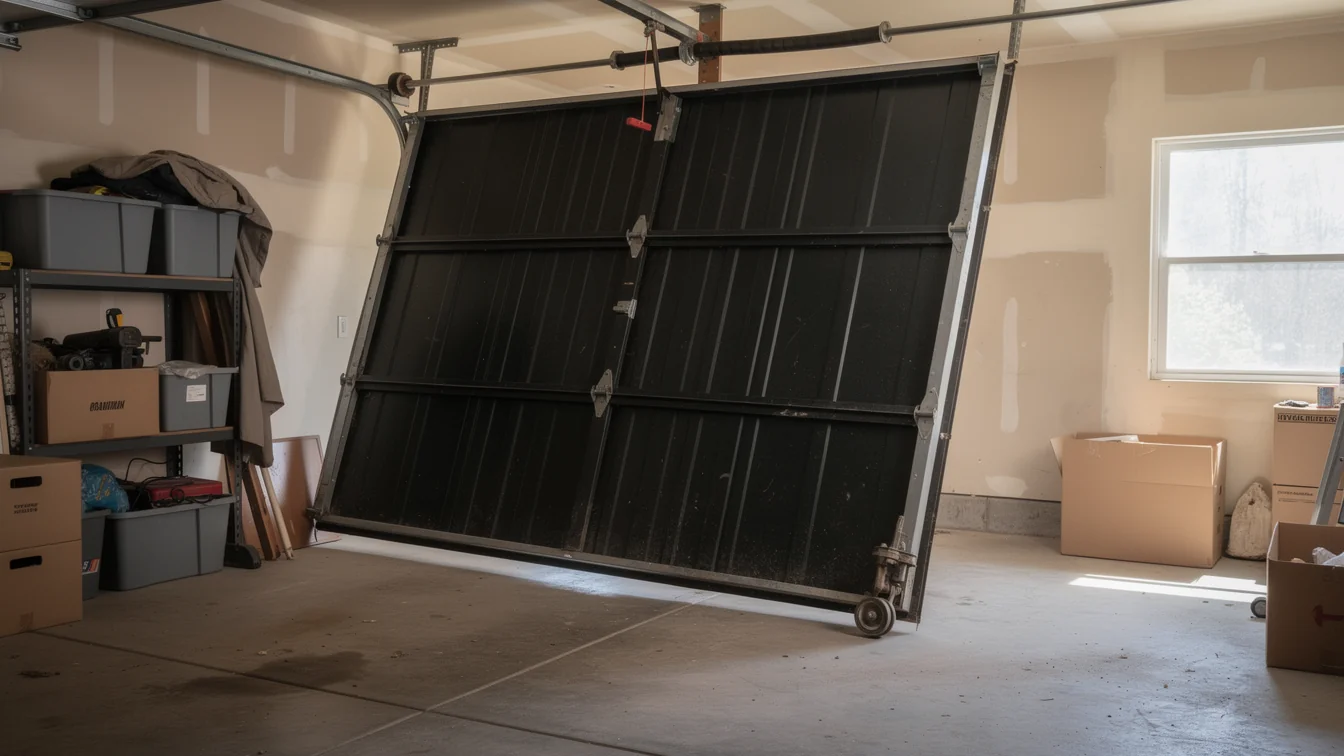
Start at the rollers, not the track. If the door is riding crooked, look first at whether a roller has split or popped out of its bracket - that's the most common starting point, and it's cheap to confirm. Run your hand along the track on both sides and feel for a gap between the rail and the wall bracket. On the housing stock common around here, built mostly through the 1980s and 90s with some newer construction going up through 2014, the original brackets are often lag-screwed into studs that have shrunk slightly over the decades. That shrinkage loosens the screws just enough that the track walks a few degrees out of plumb, and once it's a few degrees off, every open-close cycle makes it worse. Check the bottom corners of the track too - that's where a door that's been limping along on a bent rail usually shows the wear first, as scraping or a flattened spot in the metal. If you see a bend you can sight down the rail and see daylight through, that section needs replacing, not bending back.
The Problem
A door doesn't jump the track on its own - something pushes it there. In this area, the two most common triggers are a bracket that's worked loose from the framing and a cable that's stretched or frayed unevenly, pulling one side of the door faster than the other. Homes built in the 1997 median range for this market are now at the age where original hardware - rollers, brackets, the occasional original cable - is past its practical service life even if it still looks intact. A door that's slightly off track rarely announces itself with a bang. It starts as a faint rubbing noise on one side, or the door catching for a half-second on the way up. Left alone, the roller wears a groove into the track and the opener starts fighting the misalignment, which stresses the opener's drive gear long before the actual track problem gets fixed. We don't recommend trying to force a derailed door back into the track yourself - torsion cable tension makes that genuinely dangerous, and it's one job we always tell people to call for rather than attempt.
What the Weather Here Does to It
This area sits in a moderate heat climate band, not the extreme swings some parts of the country deal with, but Colleyville still sees real summer heat that matters for track alignment. Metal track and steel brackets expand under sustained high temperatures, and on an attached garage with no insulation, that expansion is enough to change the fit of a bracket that was already borderline loose. The door that tracked fine in March can start binding in July simply because the rail has grown a fraction of an inch and is now pressing against a roller it used to clear. It's not dramatic heat damage - it's cumulative. Each summer the metal expands, each winter it contracts back, and the fasteners holding the track to the frame loosen a little more with every cycle. On houses from the 1980s and 90s stock common in this market, after enough of those cycles the bracket that was torqued down tight at construction is no longer tight at all. That's a quiet failure mode, not a sudden one, which is why most owners notice the noise before they notice the actual gap.
The Cost of This Job
We don't have a flat number to hand you here because the range is genuinely wide depending on what's actually wrong. A bent section of track or a single bracket re-anchored into solid framing is a short job. A door that's been riding off-center long enough to wear out rollers on both sides, stretch a cable, and strain the opener's gear is a longer one, because now you're fixing the track and the things the bad track damaged on its way. With median household income in this market running close to $119,000, most owners we talk to want the job done right the first time rather than patched twice - which usually means replacing worn rollers and brackets along with the track section rather than just straightening what's there. Ask for a diagnosis before a price, because a quote given over the phone without seeing the door is a guess, and a bad guess either scares you off a repair you needed or under-charges for one that turns out bigger once the panel comes down.
Frequently asked questions
Can I push the door back onto the track myself?
No. A door off its track is still connected to a torsion spring or cables under real tension, and trying to muscle it back can snap a cable or drop the door on your hand. It's one of the few garage door jobs we tell every caller to leave alone, no matter how simple it looks.
Why does my door only go off track in the summer?
Heat expansion. In this climate, metal track and brackets expand under sustained summer temperatures, and if a bracket was already slightly loose from age, that extra expansion is enough to push it the rest of the way off alignment. It usually settles back some in cooler months, which is why it feels seasonal.
My house was built in the 90s - is the track original?
Possibly. A lot of the housing stock in this market dates to that era, and original track and rollers from that period are near the end of their practical life even without obvious damage. If no one's replaced the rollers or re-anchored the brackets since, it's worth having it checked before it fails during normal use.
Is it ever better to replace the whole door instead of fixing the track?
Sometimes. If the track misalignment has been going on long enough to warp a panel or wear out the opener's drive gear, replacing just the track doesn't solve the underlying cost. We look at the whole door before recommending repair over replacement, not just the part that's visibly broken.
Related garage door services in Colleyville
More garage door guides
Book garage door service in Colleyville
Call now or request a quote - tell us what the door is doing and where you are.